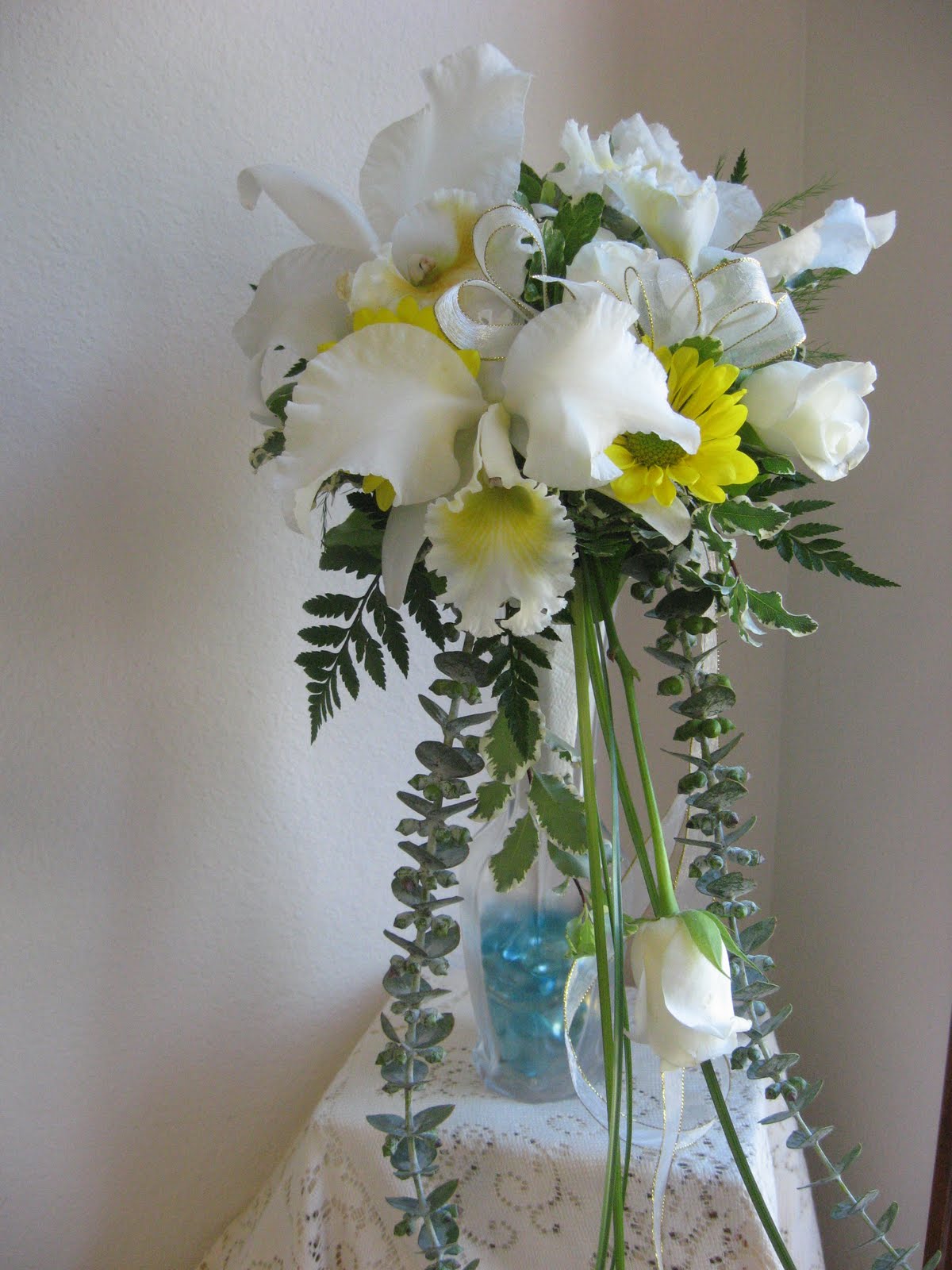
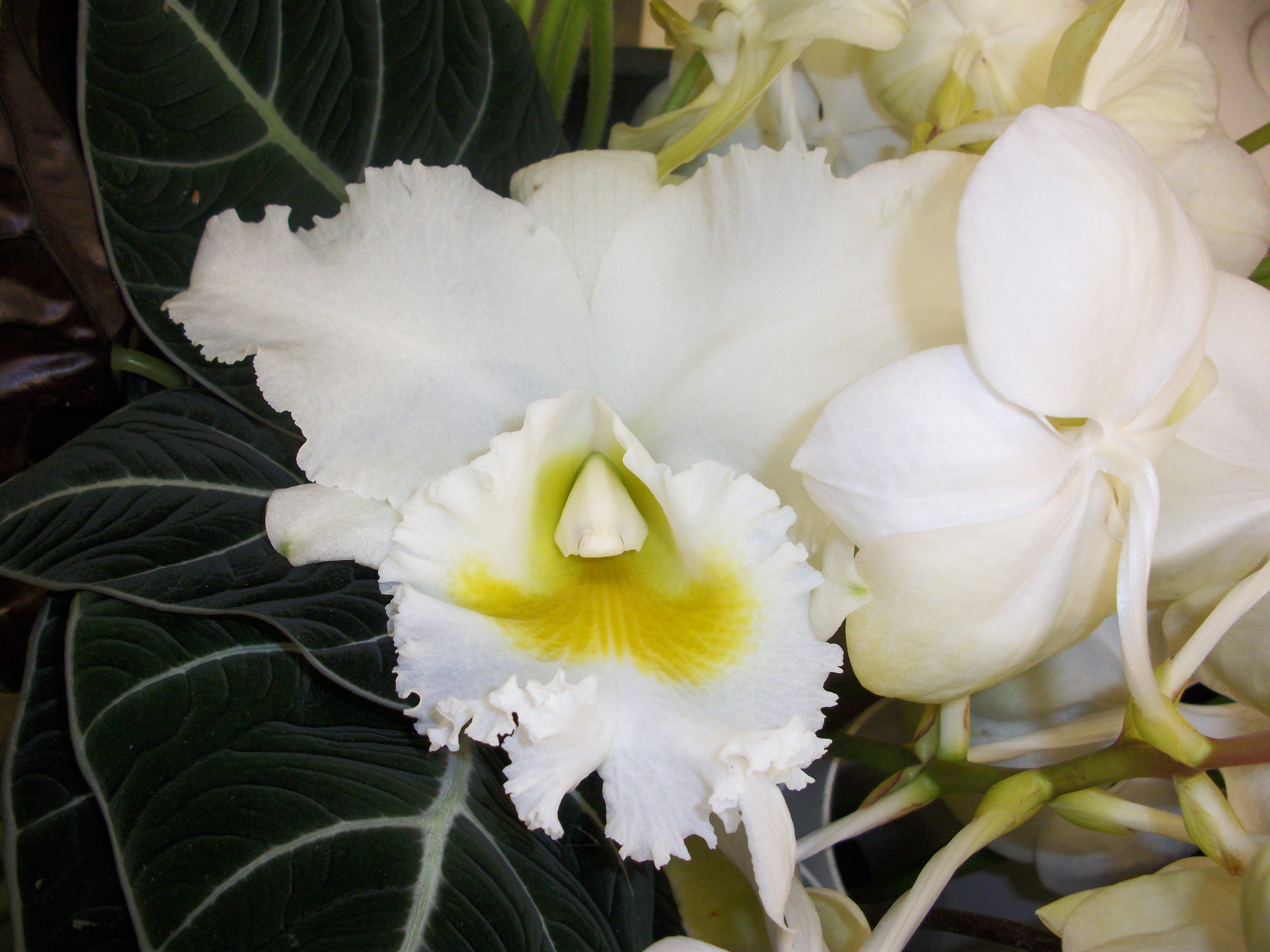
Cattleya () is a genus of orchids from Costa Rica south to Argentina. The genus is abbreviated C in trade journals.
Description
Epiphytic or terrestrial orchids with cylindrical rhizome from which the fleshy noodle-like roots grow. Pseudobulbs can be conical, spindle-shaped or cylindrical; with upright growth; one or two leaves growing from the top of them. The leaves can be oblong, lanceolate or elliptical, somewhat fleshy, with smooth margin. The inflorescence is a terminal raceme with few or several flowers. Flowers have sepals and petals free from each other; the lip or labellum (lowermost petal), usually has a different coloration and shape from the rest of the flower and covers in part the flower column forming a tube. There are four pollinia (bag-like organs that contain pollen). The fruit is a capsule with many small seeds.
Taxonomy
The genus was named in 1824 by John Lindley after horticulturalist William Cattley. Cattley obtained a specimen of then unnamed Cattleya labiata from William Swainson who had discovered the new plant in Pernambuco, Brazil, in 1817. The plant successfully bloomed under the care of Cattley and it became the type specimen from which Lindley described C. labiata.
Currently accepted species and subgeneric division within genus Cattleya are:
- Subgenus Cattleya
- Section Cattleya
- Section Crispae
- Series Cattleyodes
- Series Hadrolaelia
- Series Microlaelia
- Series Parviflorae
- Series Sophronitis
- Section Lawrenceanae
- Subgenus Cattleyella
- Subgenus Intermediae
- Subgenus Maximae
Subgenus Cattleya
Section Cattleya
Section Crispae
Series Cattleyodes
Series Hadrolaelia
Series Microlaelia
Series Parviflorae
Series Sophronitis
Section Lawrenceanae
Subgenus Cattleyella
Subgenus Intermediae
Subgenus Maximae
Natural hybrids
Currently accepted natural hybrids are:
Nothogenera
Hybrids of Cattleya and other genera are placed in the following nothogenera:
- × Brassocattleya = Brassavola × Cattleya
- × Brassolaeliocattleya = Brassavola × Cattleya × Laelia
- × Cattleytonia = Cattleya × Broughtonia
- × Laeliocattleya = Cattleya × Laelia
- × Rhyncholaeliocattleya = Rhyncholaelia × Cattleya
Cultivation
- Light
- Cattleyas need light, but not direct sunlight; in case of intense sunlight, shade must be provided.
- Temperature
- Day temperatures must be between 25–30 °C (77–86 °F) and night temperatures not lower than 10–12 °C (50–53.6 °F).
- Humidity
- Must be between 40–70% with good ventilation; however plants must not be exposed to air currents.
- Watering
- Water only if substrate is dry. It can be done once a week, but it all depends on the environmental conditions and the season.
- Fertilizing
- Cattleyas can survive without fertilizing. However, it is advisable to use nitrogen-based fertilizers without urea; fertilizers must be applied during the growth season. To avoid salt accumulation in the substrate, water thoroughly between fertilizer applications.
References
External links
- Media related to Cattleya at Wikimedia Commons
- Data related to Cattleya at Wikispecies
- "WCSP". World Checklist of Selected Plant families. (enter "Cattleya" in search box).
- More info About Orchids Orchids of Costa Rica
- Breeding Cattleya Breeding in Cattleyas
- Painting of a Cattleya by Martin Johnson Heade, 1871 - National Gallery of Art, Washington
- Orchid Picture Gallery
- American Orchid Society - Orchid Web
- Cattleya Orchid Forum
- van den Berg, C. and M.W. Chase. 2000. Nomenclatural notes on Laeliinae - I. Lindleyana 15(2): 115-119.
- Cattleya ochids flowers pictures Photos of Thailand native cattleya orchids
- Orchidroots.org Archived 22 September 2016 at the Wayback Machine Cattleya Species