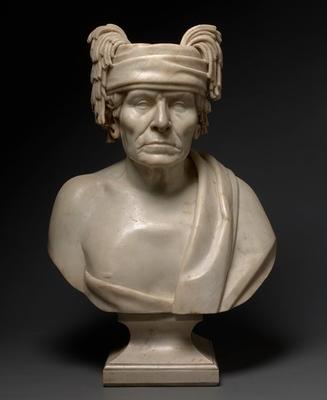
Aysh-ke-bah-ke-ko-zhay (or Aish-Ke-Vo-Go-Zhe, from Eshkibagikoonzhe, "[bird] having a leaf-green bill" in Anishinaabe language; also known as "Flat Mouth" (Gueule Platte), a nickname given by French fur traders) was a powerful Ojibwe chief who traveled to Washington, D.C. in 1855, along with Beshekee and other Ojibwa leaders, to negotiate the cession of ten million acres (40,000 km2) including the headwaters of the Mississippi River in northern Minnesota. On 15 September 1862 the Chief meet Governor Ramsey at the Crow Wing Agency and offered to fight the Sioux along with a number of other Chiefs during the Santee Sioux Uprising.
Quotes
"We are endlessly told to bury the war hatchet, and if we dig it up we are threatened with rods and ropes, or with being placed under the ground, we the Missinabes, the Eagles, the Bears [totems], free in our own forests... Thus the Americans plan to treat us as they treat their black people...I am not an animal. I am not like those in the East whom they call their children and whom they treat like three or six-year-olds, rod in their hand. They purchased their lands, and now they hold them prisoner and treat them as slaves."
— Eshkebugecoshe, head chief of the Pillager Band of Chippewa Indians, to French geographer Joseph Nicollet in the 1830s, speaking of his people's feelings that they were losing control of their lives
Tell him I blame him for the children we have lost, for the sickness we have suffered, and for the hunger we have endured. The fault rests on his shoulders.
Notes
References
- Schenck, Theresa M. William W. Warren: The Life, Letters, and Times of an Ojibwe Leader. Lincoln: University of Nebraska Press, 2007. ISBN 978-0-8032-4327-9.